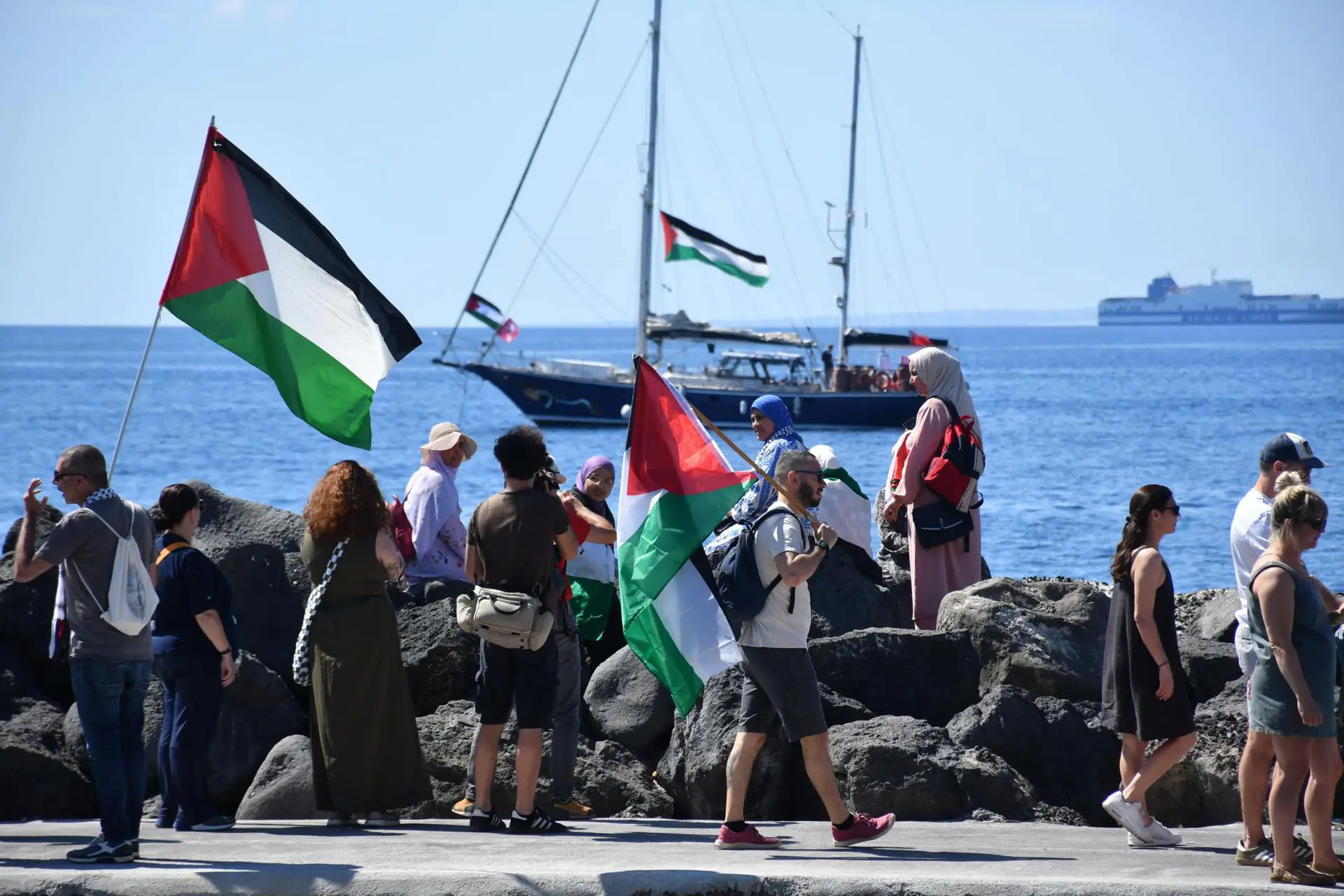
The image is powerful. A small fleet of civilian ships, calling themselves a “freedom flotilla,” sailing across the sea. On board are activists from around the world. Their stated mission: to deliver humanitarian aid directly to the people of Gaza, defying Israel’s control. For many, it’s a modern-day David and Goliath story—a moral showdown between well-meaning civilians and a state’s military might.
However, in the pragmatic and often sobering world of international law, good intentions aren’t a legal defense. The actions of these flotillas and Israel’s response don’t happen in a moral vacuum. They fall under a complex and long-standing legal framework: the International Law of Armed Conflict at Sea.
To understand why Israel’s interception of these vessels is, from a strict legal viewpoint, a justifiable act, we have to step away from the emotional headlines. We need to look at the rules that govern warfare at sea. This article is your guide to that legal reality, breaking down why Israel’s controversial position is built on solid legal ground.

The Naval Blockade: Understanding the Legal Tool Behind the Controversy
A naval blockade isn’t a modern invention. It is a tool of war as old as sailing itself, used by nations to economically and militarily isolate their enemies. From the British blockade of Napoleon’s Europe to the Union’s blockade of Confederate ports in the American Civil War, its legitimacy as an instrument of statecraft is deeply rooted in history.
Today, its use is governed by clear customary international law, authoritatively documented in the San Remo Manual on International Law Applicable to Armed Conflicts at Sea. While not a binding treaty, this manual is widely regarded as the definitive statement on the subject. For a blockade to be considered legal, it must meet five key conditions:
- Declaration and Notification: The blockading state must publicly announce the blockade and formally notify neutral governments. This allows other nations to warn their vessels away from the area.
- Effectiveness: The blockade must be maintained by a naval force sufficient to make it effective. It can’t be a mere “paper blockade.” The risk of interception must be real and constant.
- Impartiality: It must be applied equally to the ships of all nations. A state can’t pick and choose, blocking some while letting others pass.
- Proportionality: The harm to the civilian population from the blockade cannot be excessive in relation to the concrete and direct military advantage anticipated. Here, the military advantage is clear: preventing weapons and dual-use materials from reaching a hostile entity.
- Passage for Coordinated Humanitarian Aid: This is a critical point. A blockade cannot be used to starve a population. It must allow for the passage of essential humanitarian supplies, but it can require them to pass through designated channels for inspection.
Assuming Israel’s naval blockade of Gaza meets these criteria, it is a legal act of war. And this is where our analysis of the flotilla truly begins.



The Flotilla’s Dilemma: Humanitarian Gesture or Deliberate Violation?
In legal terms, the act of knowingly sailing a vessel through a legal blockade is called “breach of blockade.” It is the intent to defy the military barrier that defines the act’s illegality, regardless of the cargo’s nature.
By refusing to dock at a port designated by Israel for inspection and the subsequent overland transfer of aid, flotilla organizers make a pivotal decision. They shift their mission from a potential humanitarian delivery to a direct political confrontation. By rejecting the established channels—which exist to satisfy the fifth condition of a legal blockade—they weaken their claim to a purely humanitarian purpose.
Why is uncoordinated aid such a critical problem?
- An Unacceptable Security Risk: To the blockading power, an uninspected ship is a black box. It is impossible to know if, hidden among medical supplies and bags of flour, are weapons, rocket components, military communications tech, or funds to finance hostile activities. No nation at war would accept such a gamble.
- Erosion of the Blockade’s Legitimacy: If one ship is allowed to pass with impunity, the blockade is no longer effective. If it’s not effective, it becomes illegal under international law. Letting one vessel through would set a precedent that voids the entire security strategy.
“Lawfare”: Using International Law as a Political Weapon
This brings us to the concept of lawfare: the use of law as an unconventional weapon of war. It can be argued that the primary goal of these flotillas is not the delivery of supplies (which could reach Gaza through coordinated land routes). Instead, the goal is to provoke a response from Israel. The intent is to create an international incident, film it, and use the footage to condemn Israel in the court of public opinion and at forums like the UN, thereby generating diplomatic and political pressure. It is a public relations strategy executed under the guise of a humanitarian mission.
Israel’s Response: The Right to Act on the High Seas
Faced with a deliberate breach of a legal blockade, international law grants the blockading state a set of enforcement rights, commonly known as the right of visit, search, and capture.
This sequence of actions is standard procedure. First, the Israeli navy has the right of visit, meaning it can order the vessel to stop for inspection, even in international waters. If the vessel refuses to comply, the navy has the right to use necessary and proportional force to compel it to stop.
Once the vessel is under control, the right of search begins, allowing sailors to board the vessel to verify its cargo and papers. If it’s confirmed that the vessel’s destination was the blockaded zone, it and its cargo are subject to capture as a “prize of war.” This is the right of capture.
Diverting the ship to a national port for a full inspection and temporarily detaining the crew for investigation are integral and legal parts of this enforcement process. By participating in an illegal act, the crew members forfeit their status as neutral civilians and can be detained until their identities and roles are clarified.
From International Analysis to a Passing Bar Exam Score
Analyzing the nuances of international law in a real-world scenario like this is fascinating, isn’t it? It’s the kind of debate that ignites a passion for the legal profession. And it is precisely this ability to think deeply about complex issues that the Bar Exam looks for in a future attorney.
International Law isn’t just a theoretical subject; it’s a battleground of narratives, arguments, and, of course, decisive points on your Bar Exam.
But how do you translate a passion for complex topics like this into a high-scoring performance on test day, without getting lost in a sea of other subjects like Torts, Contracts, and Civil Procedure?
The answer is strategy. The secret isn’t just to study more; it’s to study smarter.



Deixe um comentário